chronic inflammation
chronic inflammation
-
USE OF NATURAL RESOURCES TO IMPROVE MUSCLE MASS AND REDUCE INFLAMMATORY PROCESSES IN DOGS THROUGH NATURAL FEEDING
USE OF NATURAL RESOURCES TO IMPROVE MUSCLE MASS AND REDUCE INFLAMMATORY PROCESSES IN DOGS THROUGH NATURAL FEEDING
Authors:
Cláudio Amichetti Júnior¹,² Gabriel Amichetti³
¹ Integrative Veterinary Doctor – CRMV-SP 75.404 VT; MAPA 00129461/2025, CREA 060149829-SP Sustainable Agronomist, Specialist in Feline Nutrition, Cannabinoid Medicine and Natural Feeding, Petclube. With over 40 years of practical experience dedicated to felines, focusing on dietary transition and wellness protocol development. ² Institutional Affiliation Petclube, São Paulo, Brazil ³ Veterinary Doctor CRMV-SP 45.592 VT, Specialization in Orthopedics and Small Animal Surgery – Clínica 3RD Vila Zelina SP
Corresponding Author: Cláudio Amichetti Júnior, [dr.claudio.amichetti@gmail.com]
Conflict of Interest: The authors declare no conflict of interest.
Petclube – Science, Genetics and Animal Welfare
Abstract
Chronic low-grade inflammation and progressive loss of muscle mass are commonly observed in dogs fed ultra-processed diets rich in refined carbohydrates, vegetable oils, and low-biological-value proteins. Skeletal muscle acts not only as a mechanical structure but also as an endocrine organ involved in metabolic and immune regulation. In this context, natural feeding emerges as a nutritional and therapeutic strategy capable of reducing systemic inflammation and promoting muscle maintenance and recovery. This article establishes a scientific parallel between the use of natural resources—such as high-biological-value animal proteins, stable fats, bioavailable micronutrients, and bioactive compounds—and their effects on muscle improvement and inflammation reduction in dogs. Physiological, metabolic, and immunological evidence demonstrates that natural feeding supports the gut–muscle–immune axis, reduces muscle catabolism, and significantly contributes to canine health, longevity, and quality of life.
Keywords: natural feeding; chronic inflammation; skeletal muscle; dogs; integrative veterinary medicine.
Introduction
Chronic low-grade inflammation (CLGI) is a subclinical pathophysiological process characterized by the persistent activation of inflammatory pathways and the production of low-level pro-inflammatory mediators, without the classical acute signs (HOTCHISS et al., 2003; CALDER, 2010). In dogs, this condition is increasingly recognized as a central etiological factor for a series of metabolic, immunological, and degenerative disorders (VANNUCCHI et al., 2017). One of the primary mechanisms for CLGI development resides in diet, particularly ultra-processed diets (UPDs), which have become ubiquitous in modern canine nutrition. These diets are often characterized by a high content of high-glycemic carbohydrates, which can lead to insulin spikes and subsequent insulin resistance, contributing to a pro-inflammatory state (MARION et al., 2021). Furthermore, an imbalance in the omega-6 to omega-3 fatty acid ratio, with a prevalence of the former from refined vegetable oils, favors the synthesis of pro-inflammatory eicosanoids, perpetuating the inflammatory cycle (CALDER, 2010). The presence of low-digestibility proteins and the incorporation of synthetic additives can compromise gut barrier integrity and negatively modulate the microbiota, resulting in dysbiosis and increased translocation of lipopolysaccharides (LPS), potent inducers of systemic inflammation (BARKO et al., 2018).
Parallel to CLGI, functional sarcopenia, defined as the progressive and generalized loss of skeletal muscle mass and strength, has been observed with increasing frequency in veterinary clinical practice, not only in geriatric animals but also in young and adult dogs with predisposing conditions such as osteoarticular diseases, endocrinopathies, chronic allergies, and gastrointestinal disorders (PAULO; PAULA, 2018; HAND et al., 2010). Skeletal muscle, in addition to its primary function in locomotion and structural support, is an active endocrine organ, secreting a wide range of myokines—bioactive peptides that exert autocrine, paracrine, and endocrine effects (PEDERSEN, 2013). These myokines, such as interleukin-6 (IL-6) and irisin, modulate systemic inflammation, insulin sensitivity, and immune response, demonstrating an intrinsic connection between muscle health and metabolic and immunological homeostasis (TIZARD, 2018). CLGI and sarcopenia are interdependent, forming a vicious cycle where inflammation exacerbates muscle catabolism and muscle mass loss compromises the capacity to secrete anti-inflammatory myokines (VANNUCCHI et al., 2017).
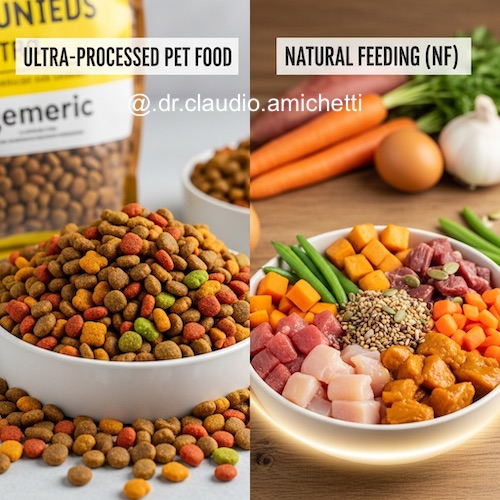
In this scenario, natural feeding (NF), based on fresh, minimally processed, and biologically appropriate ingredients for the canine species, emerges as a promising nutritional and therapeutic intervention (CASE et al., 2011). Such an approach aims to restore metabolic and immunological homeostasis, providing optimized nutritional substrates for muscle health and inflammatory modulation. The strategic use of natural resources, including high-biological-value and digestible animal proteins, stable fats with favorable fatty acid profiles, bioavailable micronutrients, and a diverse range of bioactive compounds with anti-inflammatory properties, promotes an anabolic metabolic environment and mitigates chronic inflammation (HAND et al., 2010; WYNNE et al., 2020).
The present work aims to analyze, from a scientific perspective and based on physiological, metabolic, and immunological evidence from veterinary and comparative literature, the mechanisms by which natural feeding effectively contributes to muscle improvement and the reduction of inflammatory processes in dogs, substantiating its relevance as a strategy for animal health and welfare.
Theoretical Background
Natural feeding for dogs, by adhering to principles of evolutionary nutrition, offers a complex set of benefits that extend far beyond the mere provision of calories. Below, we detail the main mechanisms of action that support its effectiveness in muscle health and inflammatory modulation.
1. Natural Proteins and Muscle Anabolism
Animal-derived proteins, such as those found in meats, offal, eggs, and fish, are considered to have high biological value due to their complete essential amino acid profile and high digestibility (HAND et al., 2010). In dogs, adequate intake of these proteins is fundamental for supporting muscle anabolism. Among the essential amino acids, leucine plays a critical role in activating the mTOR (mammalian Target of Rapamycin) signaling pathway, which is a central regulator of muscle protein synthesis and, consequently, of muscle tissue growth and repair (VANNUCCHI et al., 2017). The abundance and bioavailability of leucine in animal proteins are significantly superior to those found in most isolated vegetable proteins, which often have limiting amino acid profiles for canine physiology.
In addition to their role in protein synthesis, amino acids such as glycine and proline are important precursors of collagen, an essential structural protein for the integrity of the extracellular matrix, tendons, and ligaments. Maintaining the health of these structures is crucial for muscle function and injury prevention (KAPUT; RODRIGUEZ, 2006). Glycine, in particular, has also been studied for its direct anti-inflammatory effects, demonstrating the ability to reduce the expression of pro-inflammatory cytokines and protect against oxidative damage, contributing to a more favorable muscle environment for anabolism (WYNNE et al., 2020).
2. Natural Fats and Inflammatory Modulation
Fats play a multifaceted role in canine health, from providing concentrated energy to modulating inflammatory processes. Stable animal fats, found abundantly in sources like meat and fat from poultry and cattle, when balanced and not excessively processed, provide essential fatty acids and an energy source that does not induce glycemic spikes, unlike refined carbohydrates.
A crucial aspect of inflammatory modulation lies in the balance between omega-3 (ω-3) and omega-6 (ω-6) fatty acids. Natural sources of ω-3, such as fish oil and certain vegetable oils (flaxseed, chia), are substrates for the synthesis of pro-resolving lipid mediators, such as resolvins and protectins. These molecules actively work in the final phase of the inflammatory process, promoting the clearance of inflammatory cells and restoring tissue homeostasis without suppressing immunity (CALDER, 2010). In contrast, an excess of refined vegetable oils, rich in ω-6 (such as sunflower, corn, soybean oil), favors the production of pro-inflammatory eicosanoids, like certain prostaglandins and leukotrienes, perpetuating chronic pain, muscle inflammation, and joint degeneration (CALDER, 2010).
Additionally, the use of natural fats improves mitochondrial energy efficiency, providing a preferred substrate for mitochondria, which can reduce oxidative stress and optimize ATP production. Robust mitochondrial function is vital for muscle endurance and post-exercise recovery, minimizing cellular damage and subsequent inflammation (VANNUCCHI et al., 2017).
3. Natural Micronutrients and Mitochondrial Function
Skeletal muscle is metabolically active and highly dependent on efficient mitochondrial function for maintaining strength, endurance, and recovery capacity. A wide range of micronutrients, present in a bioavailable form in natural foods, are essential cofactors in various metabolic reactions occurring in mitochondria and in protection against oxidative stress.
Heme iron, found abundantly in meats and offal, is crucial for oxygen transport and the electron transport chain in mitochondria. Minerals such as zinc, selenium, and magnesium act as enzymatic cofactors in key metabolic pathways and as components of antioxidant enzymes (e.g., glutathione peroxidase, superoxide dismutase), protecting muscle cells against oxidative damage generated by energy metabolism and inflammatory processes (HAND et al., 2010). B-complex vitamins (thiamine, riboflavin, niacin, pyridoxine, cobalamin, etc.), present in offal and meats, are essential coenzymes in the metabolism of carbohydrates, fats, and proteins, ensuring efficient ATP production.
Chronic deficiency of these micronutrients, common in unbalanced or low-bioavailability processed diets, compromises energy production, increases oxidative stress, and favors the onset and perpetuation of muscular inflammatory processes, negatively impacting muscle performance and health (VANNUCCHI et al., 2017).
4. The Gut–Muscle–Immune Axis: A Fundamental Connection
Contemporary understanding of canine physiology recognizes a complex and bidirectional interconnection between the gastrointestinal tract, skeletal muscle, and the immune system, forming what is known as the gut–muscle–immune axis (BARKO et al., 2018). Natural feeding plays a central role in positively modulating this axis.
Firstly, NF, being rich in prebiotic fibers (from fresh vegetables) and generally including a greater variety of proteins and fats, promotes greater diversity and stability of the gut microbiota (WYNNE et al., 2020). A diverse microbiota is associated with the production of short-chain fatty acids (SCFAs), such as butyrate, propionate, and acetate, which are products of fiber fermentation by beneficial bacteria. SCFAs not only serve as an energy source for colonocytes but also possess potent anti-inflammatory and systemic immunomodulatory effects (CALDER, 2010). They can, for example, act on specific receptors (GPR41, GPR43) on immune cells, influencing the differentiation of regulatory T lymphocytes and the production of anti-inflammatory cytokines.
Secondly, natural feeding contributes to maintaining the integrity of the intestinal barrier. Ultra-processed diets, rich in additives, simple carbohydrates, and low-digestibility proteins, can lead to dysbiosis and increased intestinal permeability (a phenomenon known as leaky gut). When the intestinal barrier is compromised, there is greater translocation of lipopolysaccharides (LPS), a component of the cell wall of Gram-negative bacteria, from the intestinal lumen into systemic circulation. LPS is a potent inducer of the innate immune response, activating TLR4 receptors on various cells and triggering a pro-inflammatory cascade characterized by the release of cytokines such as TNF-α, IL-1β, and IL-6 (BARKO et al., 2018; TIZARD, 2018). This metabolic endotoxemia resulting from LPS translocation is one of the main factors underlying CLGI and has been directly associated with increased muscle catabolism and insulin resistance, exacerbating sarcopenia. The reduction of intestinal permeability and, consequently, LPS translocation promoted by NF, is crucial for mitigating this systemic inflammation and preserving muscle mass.
Finally, the bidirectional communication of the axis is completed by skeletal muscle. Muscles, through the secretion of myokines (such as IL-6 and irisin), can influence metabolism and immunity, including gut health (PEDERSEN, 2013). Healthy and metabolically active muscle, stimulated by an appropriate diet and exercise, secretes myokines that can have anti-inflammatory effects and improve intestinal integrity. Conversely, systemic inflammation induced by dysbiosis and leaky gut can lead to anabolic resistance in muscle, hindering protein synthesis even with nutritional and physical stimuli, and, in turn, reducing the muscle's capacity to secrete beneficial myokines. Natural feeding, by optimizing gut health and reducing inflammation, creates a virtuous cycle that supports overall muscle and immune function (VANNUCCHI et al., 2017).
Discussion
The data and physiological mechanisms analyzed herein reinforce that canine skeletal muscle health transcends its primary mechanical function, constituting a central pillar in an intricate system that interlinks energy metabolism, immune response, and gut microbiota integrity. Natural feeding (NF), in turn, is not limited to merely providing nutrients but acts multifactorially and synergistically, supplying optimized substrates for muscle anabolism while simultaneously mitigating the persistent inflammatory stimuli that characterize chronic low-grade inflammation (CLGI).
As detailed in the theoretical background, the provision of high-biological-value and digestible animal proteins, rich in essential amino acids like leucine, is crucial for activating the mTOR pathway, a master regulator of muscle protein synthesis (VANNUCCHI et al., 2017). Unlike low-biological-value or isolated vegetable proteins, which may have limiting amino acid profiles, NF proteins ensure the necessary anabolic support for muscle mass maintenance and recovery, combating sarcopenia. The presence of glycine and proline, moreover, strengthens the extracellular matrix and exerts direct anti-inflammatory effects, complementing structural action with immunological modulation.
The inflammatory modulation provided by NF is particularly relevant. The balance between omega-3 and omega-6 fatty acids, with an emphasis on natural sources of omega-3, allows for the synthesis of resolvins and protectins. These lipid mediators, derived from the metabolism of polyunsaturated fatty acids, are potent pro-resolving agents of inflammation, actively working to conclude the inflammatory process without suppressing immunity (CALDER, 2010). In contrast, ultra-processed diets, with their excess of omega-6-rich vegetable oils and unbalanced fatty acid profiles, promote the formation of pro-inflammatory eicosanoids, perpetuating chronic pain, muscle inflammation, and joint degeneration. Additionally, improved mitochondrial energy efficiency and reduced oxidative stress, facilitated by the availability of natural fats and micronutrients like heme iron, zinc, selenium, magnesium, and B-complex vitamins, are essential for muscle function and preventing oxidative damage that can initiate or exacerbate inflammatory processes.
The integrity of the gut–muscle–immune axis is fundamental. Natural feeding, by promoting a more diverse and robust intestinal microbiota, contributes to reducing intestinal permeability and, consequently, diminishes the translocation of lipopolysaccharides (LPS). The metabolic endotoxemia resulting from LPS absorption is a potent inducer of CLGI and muscle catabolism mediated by inflammatory cytokines (BARKO ets al., 2018). By mitigating this process, NF not only preserves muscle mass but also optimizes the animal's overall immune response, reducing the systemic inflammatory load.
Clinically, the application of NF has demonstrated that dogs fed balanced, species-appropriate diets exhibit not only better lean body condition but also greater physical endurance, more efficient post-exercise recovery, and a significantly lower incidence of musculoskeletal inflammations. These benefits are particularly evident in life stages requiring higher metabolic demand, such as during aging, in post-surgical or traumatic rehabilitation processes, and in dogs undergoing intense physical activity (HAND et al., 2010). The reduction of systemic inflammation, in turn, not only improves overall well-being but also enhances the efficacy of conventional and integrative therapies, allowing for a more robust and lasting response to treatments, and crucially, slowing the progression of chronic diseases. Therefore, natural feeding establishes itself as a therapeutic intervention based on the evolutionary physiology of the canine species, offering a pathway for optimizing health
