Notícias
Notícias
 Divulgação médico veterinária. Noticias, artigos, fotos, imagens, vídeos, Petclube é o melhor site que vende cães bulldog, pug, rhodesian ridgeback, frenchie bulldog, chihuahua, buldogue campeiro, olde english bulldogge, pitmonster, gatos ragdoll, maine coon , bengal, exotico, persa, com anúncios de divulgação de filhotes de cachorros e gatinhos munchkin toy raríssimos para todo Brasil
wthats 55 11 9386 8744 Juquitiba SP
O Convívio com Cães no Auxílio ao Desenvolvimento Afetivo Infantil
Glaucielle Nunes de Oliveira
Monografia apresentada à Universidade Estácio de Sá como requisito parcial para obtenção do grau de Bacharel em Psicologia. Ano 2005
Resumo
A maior razão para existência dos diversos ramos que atuam na área de saúde é a busca incessante na melhoria na qualidade de vida das pessoas, e nesta procura, a psicologia não surge como exceção. Assim sendo, o estudo do tema torna-se de grande relevância, visto que apesar das correntes tradicionais, a psicologia tem buscado fontes alternativas para proporcionar esta melhoria de qualidade de vida. Desenvolvida pelo Dr. Boris Levinson, a temática em questão apesar de pouco explorada, trata da utilização terapêutica de cães no tratamento de crianças que sofrem com problemas psicológicos, de relacionamento social, de afetividade, de aprendizagem entre outros, baseando-se em estudos que apontam os benefícios do convívio de crianças com esses animais. Estes benefícios foram comprovados nesta pesquisa a partir de análise dos relatos de profissionais de psicologia que realizam este tratamento e pais de crianças que convivem ou não com cães, no sentido de confirmar que de uma forma ou de outra, aquelas que convivem com cães, ou, que fazem tratamento mediado por cães treinados apresentam maior afetividade, convívio social e elevada auto-estima, pois os cães facilitam o convívio da criança com seu meio, porque, segundo os próprios profissionais, estes animais proporcionam um alívio imediato para a pessoa em tratamento e proporciona melhoras nos quadros de ansiedade, estresse, hipertensão, auto-estima, comunicação e sensibilidade.
Palavras-chaves: Cinoterapia. Crianças. Psicologia.
1. Introdução
O presente estudo aborda um assunto novo, principalmente no universo teórico da Psicologia. As publicações sobre tal tema são diminutas, assim como as práticas empíricas. Esse fato, particularmente, despertou grande interesse em desenvolver a pesquisa, tornando ambicioso o título do trabalho. Mas, qual a origem desse interesse?
O ritmo frenético atual tem causado grandes problemas não somente aos adultos, mas também às crianças, que têm sido grandes vítimas deste processo. Por esta razão, e em decorrência dos resultados de pesquisas científicas que mostram que o convívio com animais é altamente benéfico, alguns profissionais estão pensando em desenvolver, a partir daí, uma terapia alternativa para auxiliar no tratamento de pessoas que necessitam de auxílio psicológico com o fim de proporcionar-lhes uma melhor qualidade de vida. />
Tal técnica refere-se a Pet Terapia realizada com cães, que teve origem aproximadamente no século XVIII na Inglaterra, onde foi descoberto que a presença do bicho traz benefícios psicológicos, pedagógicos e sociais ao paciente, principalmente às crianças, pois o convívio com cães exerce efeitos benéficos no comportamento afetivo. Com as crianças, os cães estabelecem uma comunicação recíproca que possibilita um desenvolvimento da auto-estima, respeito, companheirismo, visão de futuro e ainda estimula a liberação de substâncias que podem ser benéficas ao organismo, como endorfina e adrenalina (BECKER,2003)
Portanto, o estudo sobre o tema é de suma importância devido ao cenário atual do mundo contemporâneo, em que as pessoas têm seu tempo cada vez mais limitado e o ritmo de vida cada vez mais estressante, levando-as a apresentar problemas de ordem psicológica.
Fazendo um panorama histórico, podemos citar que a interação entre cães e seres humanos foi marcada por cerca de 15 mil anos de admiração e confiança recíprocas. Nesse espaço de tempo, civilizações surgiram e desapareceram, o desconhecido foi explorado, alguns dos grandes obstáculos ao progresso humano foram vencidos. E tudo isso foi feito com o cão – parceiro, companheiro, protetor – ao nosso lado.
No entanto, o ser humano sempre sofreu uma espécie de “Síndrome de Narciso” que o levou a construir mitos de si mesmo, como o de considerar-se feito à “imagem e semelhança de Deus” ou o “coroamento da criação”. É como se toda a evolução biológica que o precedeu fosse uma espécie de ensaio da natureza para atingir o ápice da perfeição: o surgimento do Homo sapiens.[1]
Por sentir-se o centro do universo, o homem reconhecia no animal e nas outras espécies simples “coisas”, desprovidas de vida própria, que existem apenas para o servir. Ao iniciar o processo de civilização, o ser humano levou consigo o planeta inteiro, desequilibrando todo o ecossistema.
A partir do momento que foi despertada a necessidade de preservarmos o meio ambiente, no entanto, surgiu uma nova concepção de relacionamento, voltada para o respeito a todas as formas de vida, onde se incluem os animais.
O animal, que antes servia apenas de suporte, evoluiu também para animal de estimação. Sua relação com o ser humano tornou-se tão complexa que, ao entrar para uma família, ele é capaz de provocar alterações no comportamento de todos os seus membros.
Dos animais domésticos, o cão é uma das espécies mais brincalhonas que existe. Agitação e irreverência são as características comuns a muitos deles. A natureza alegre de um cão saudável é uma das maiores satisfações para o seu dono, por isso não é necessário sublinhar como é benéfica a relação entre uma criança e um cão. Para a criança, o cão torna-se um privilegiado e companheiro inseparável de brincadeiras.
Com todos os avanços da ciência, pesquisas (como as desenvolvidas por BECKER,2003; GOLDEN,2004) mostram, que o convívio com os animais é considerado um dos melhores recursos terapêuticos. Os animais domésticos passaram a ser considerados importantes na sociedade, por oferecer apoio emocional.
Segundo alguns estudos, os animais de comportamento dócil, trazem ao ser humano momentos de tranqüilidade e alegria. Nesses momentos principalmente, as pessoas deixam de lado seus problemas, dores, insatisfações, seus momentos de solidão e tristeza; sentem-se mais dispostas a falar com os animais, pois estes os retornam um olhar não julgador e não crítico. Além disso, a simples presença de um animal de estimação pode ser relaxante, ajuda a diminuir a pressão sangüínea e o estresse.
Para comprovar esta relação, foram realizadas diversas pesquisas científicas, obtendo várias informações relevantes para a Psicologia. Por exemplo, em 1999, Karen Allen (apud FARIA, 2004), cardiologista da Universidade de Nova York, agrupou 48 corretores do mercado financeiro (homens e mulheres) que apresentavam altos níveis de pressão arterial e stress. Metade deles, escolhidos ao acaso, receberam um cão ou gato e passaram a morar juntos. Após um semestre o grupo "tratado" com animais de estimação tinha pressão arterial normal e o stress reduzido à metade. Outros autores pesquisaram a sobrevivência de enfartados coronários possuidores ou não de animais de estimação. Nessa pesquisa, eles analisaram 92 pessoas.
Destas 53 possuíam animais de estimação incluindo cães; neste grupo foi alcançado o índice de sobrevivência de 94%, após o infarto. No restante do grupo, que não possuía animais, o índice obtido caiu para 71%. Em 1997, houve o acompanhamento de 2805 pessoas por 89 meses. As mulheres observadas que tomavam antidepressivos e possuíam animais de estimação, precisavam de doses menores do que as que não os possuíam. Tendo em vista os benefícios obtidos com a interação homem-animal, acredita-se que, uma terapia onde predomine esta interação seja uma alternativa positiva de reabilitação física e mental em seres humanos, pois a ação de cuidar de outro ser vivo tende a ser autocurativa.[2]
Nos idosos, sabe-se que o animal proporciona a melhora da auto-estima devido ao contato físico e ao despertar do senso de responsabilidade. Pelo fato de terem que cuidar do bicho, as pessoas mais velhas passam a se sentir úteis. A introdução de animais em asilos é uma boa forma de recreação e socialização. (LIMA, 2005)
Em muitos lugares, os animais são usados na recuperação de doentes, convalescentes e até presidiários. Na Europa, 30% das terapias de recuperação utilizam animais. Em San Francisco, nos Estados Unidos, existe um programa em que cães e gatos oferecem conforto a pacientes terminais de Aids.
A aplicação dessa técnica foi muito positiva e seus resultados começaram a ser divulgados nos Estados Unidos, indicando a possível melhoria nos aspectos afetivo, comunicativo e cognitivo dos pacientes, principalmente das crianças.
Atualmente, os princípios dessa terapia mediada por animais são utilizados em todo o mundo. O trabalho é realizado através da utilização de cães, gatos, cavalos, peixes, tartarugas, coelhos, etc em hospitais e escolas especializadas no tratamento de crianças que apresentam problemas psicológicos e na reabilitação de crianças portadoras de deficiências múltiplas. O vínculo afetivo que o paciente logo estabelece com o animal é o primeiro passo para o sucesso da terapia, pois abre caminho para a comunicação com o terapeuta.
Os animais que participam são selecionados segundo critérios de saúde e comportamento. São controlados por Médicos Veterinários e submetidos semestralmente a exames laboratoriais, eliminando qualquer risco de contágio. O processo se inicia com a escolha dos animais de acordo com conhecimentos profundos de comportamento animal, analisando se o animal pode ou não ser levado para junto do paciente.
Visto o exposto, não há dúvidas de que muito se tem a ganhar no que se refere ao estudo sobre o tema que desencadeou a pesquisa, visto que produzirá efeitos a posteriori, já que a criança que tem seu lado afetivo bem explorado e desenvolvido terá grandes chances de se tornar um adulto bastante equilibrado afetivamente.
O objetivo da pesquisa proposta foi verificar se o convívio com cães no seio da família realmente influencia o comportamento de crianças, melhorando a comunicação, a auto-estima e principalmente a afetividade infantil. Por isso, foi realizada pesquisa qualitativa de campo - aquela que trabalha com o universo de significados, motivos, aspirações, crenças, valores e atitudes, o que corresponde a um espaço mais profundo das relações. Foram feitas entrevistas, via e-mail, com 2 profissionais de psicologia que fazem uso da Cinoterapia – Terapia Facilitada por Cães, a fim de identificar a importância de tal técnica utilizada com crianças que apresentam problemas na afetividade.
Além disso, tendo como objetivos específicos comparar a afetividade de crianças que convivem com cães com crianças que não convivem com cães, foram realizadas, de forma adicional, 10 entrevistas semi-abertas, o que permitiu que o entrevistado relatasse suas experiências de forma livre, não havendo necessidade de ficar vinculado apenas àquilo que lhe foi perguntado; tais entrevistas foram realizadas com pais de crianças na faixa etária de 3 a 10 anos, sendo que os entrevistados foram divididos da seguinte maneira: 5 pais de crianças que possuem cães de estimação e 5 pais de crianças que não possuem cães em casa. Tal pesquisa foi centrada na cidade de Campos dos Goytacazes e todos os entrevistados assinaram o Termo de Consentimento Livre e Esclarecido, concordando em participar da pesquisa (vide Anexo I e II). A partir das informações colhidas através da pesquisa, houve a utilização da técnica de análise de conteúdo a fim de averiguar a veracidade da hipótese previamente estabelecida.
No primeiro capítulo veremos as diferenças em relação a afetividade e o emocional de crianças que convivem com cães e crianças que não convivem com tais animais. No segundo capítulo abordaremos a relação existente entre o convívio com cães e o comportamento das crianças durante as suas brincadeiras, tendo como foco a averiguação de indícios de agressividade nas brincadeiras daquelas que não convivem com esses animais. No terceiro capítulo trataremos dos aspectos relacionados ao relacionamento social das crianças, levando em consideração o convívio ou não com cães. No quarto capítulo iremos averiguar se o convívio com cães influencia ou não o rendimento escolar das crianças. No quinto e último capítulo abordaremos a importância da cinoterapia, levando em consideração o ponto de vista das psicólogas que fazem uso de tal terapia.
__________
[1] CARVALHO, V. F. Convívio com Animais é um Recurso Terapêutico. Disponível em: <http://www.kennelclub.com.br/>.
[2] FARIA, A. B. et al. A Cinoterapia no Auxílio à Reabilitação Física de Idosos. Universidade Federal de Uberlândia, Minas Gerais. Disponível em: http://www.anclivepa-rs.com.br/boleti ... o/boletim_34_htm/pag6.htm.
BULDOGUE FRANCÊS
PUG
RHODESIAN RIDGEBACK
BULDOGUE INGLÊS
STAFFORDSHIRE BULL TERRIER
BULL TERRIER
AMERICAN STAFFORDSHIRE TERRIER
CHIHUAHUA
OVERBULLY(SUPER BULLY)
EXOTICOS AMICAT´S
MAINE COON AMICAT´S
BENGAL AMICAT´S
RAGDOLL AMICAT´S
- CÃES F:55 011 9386 8744
- GATOS F:55 011 8485 4545
- GERAL F:55 011 4684 1047
PETCLUBE
Amichettibullys & AMICAT´S Bengal Maine Coon Ragdoll Exótico
Villa Amichetti- Paraíso Ecológico- uma forma sustentável de ConViver.
Rod. Régis Bittencourt, km 334, apenas 40 min. de SP-Juquitiba .
Agende uma agradável visita para adquirir seu filhote e faça belo passeio no santuário ecológico com a Mata Atlântica preservada
Enquanto Lassie e A Dama eo Vagabundo são divertidos de se assistir, provavelmente não é são a melhor maneira de escolher um cão para seu filho. Então, como é que você vai escolher um filhote de cachorro, de entre todas as raças diferentes ? Uma regra de ouro é escolher uma raça por sua disposição, temperamento, tamanho e nível de energia - que deve se adequar ao estilo de vida da sua família. Apresentamos 10 cães que são especialmente adequados para crianças.
Cães melhores raças de cães para famílias:
bull Dog e American Pocket Bully
O Bulldog Exoitco tem uma construção robusta que é perfeito para crianças que gostam de algazarra. O Bull Dog é confiável e vive bem em casas e assim como apartamentos.

No entanto, ele não vai ganhar nenhum prêmiode "cão mais enérgica." Um cão dócil, amigável e leal, ele se dá bem com outros animais de estimação e os cães também.
O Pocket bully é ainda mais robusto e mais rústico, bastante cnfiável, adora crianças e se
da muito bem com outors cães assim como gatos. Tem sido uma atração nova nos EUA e Europa, ainda bem caros, qunado puros, são uma opção para empresários, explica o juiz e cinófilo Claudio do canil Amichetti de Juquitiba.
Filhotes de bully para venda doPremiado Canil e Moderno Amichetti Veja Fotos e Preços ao final do artigo Confira fotos e vídeo de nossos chihuahuas ao final do artigo
CONTATO COM CANIL AMICHETTI info@petclube.com.br/amichettibully@gmail.com
F 11 99386-8744 hc / 96393-1128
Amichetti Kennel possui Excelente pedigree, descendente de campeões, saudáveis, contrato exclusivo do Premiado Canil Amichetti, vacinados eticamente por equipe de veterinários Vetvale.
 Petclube
Facebook https://www.facebook.com/petclube/
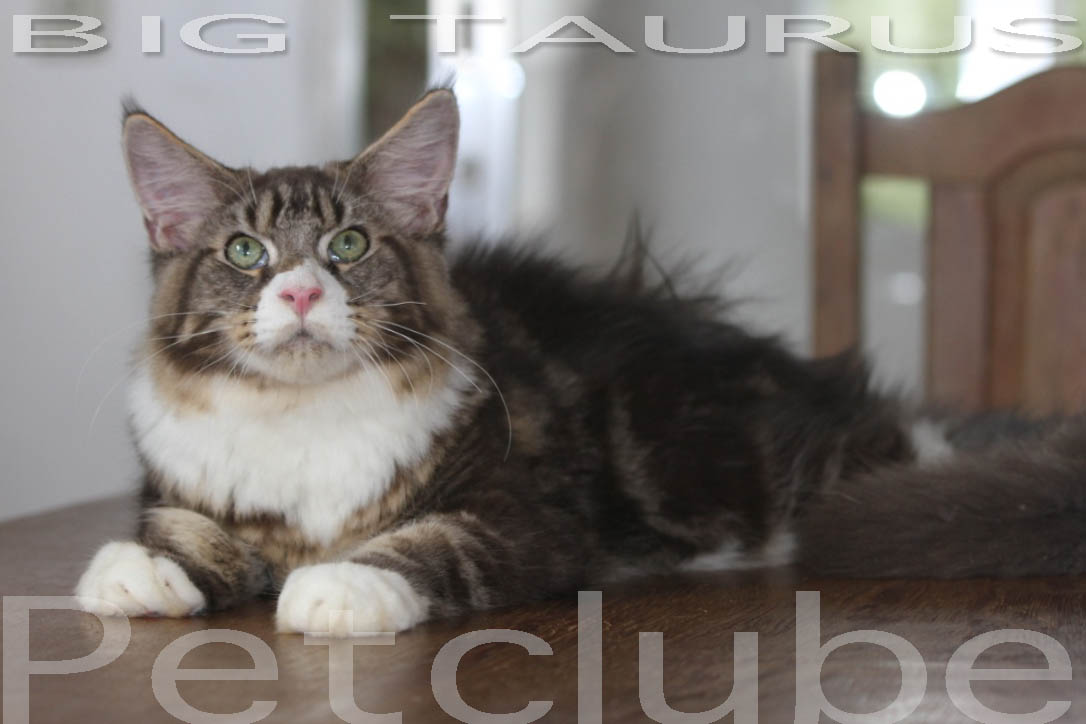
We can offer you best maine coon kittens of different colors!
We located Juquitiba SP Brazil
Adult Maine Coon cat weigh between 7 and 12 kg, more elegant cat can weigh from 4 to 6 kg. Generally, these cats grow quite slowly and reach maturity only by 3-4 years. Maine Coons are of SLH group and their hair deserves special attention, especially the tail! Short hair on the head, shoulders and limbs becomes progressively longer to the bottom and sides. The long shaggy hair on the stomach and pants, lush flowing hair on the tail, such thick hair looks like a collar. This coat is a boa, which can protect the cat from snow, rain and wind. And yet it is surprisingly silky by touch and shiny. Who has ever stroked these cats will never forget such a pleasant feeling. A long strong and muscular body makes the animal very maneuverable; they have strong and long legs. Long tufts of hair between the toes help them walk on snow without sinking. There are brushes at the ends of the ears, making it look like a lynx.
Many people incorrectly name this breed as mainecoone, maicoon, meykun, minecoon or even maycoon :). During the meal, Coon uses his paws as a spoon. Before they start drinking, they beat their paws in the water and rake it. It is believed that this is the instinctive action of the wild times when they broke through the ice before drinking water. So only adult cats do and Maine Coon kittens drink water ordinary. Describing the nature of the cat, it's hard to be objective.
Maine Coon looks like a wild tiger but with good character, great temperament, they are very intelligent and self-confident. He is the ideal companion for the whole family.
The Maine Coon is among the largest domesticated breeds of cats. It has a distinctive physical appearance and valuable hunting skills. It is one of the oldest natural breeds in North America, specifically native to the state of Maine,where it is the official state cat.
Although no records exist regarding the Maine Coon's exact origins and date of introduction to the United States, there are multiple competing theories. The breed was popular in cat shows in the late 19th century, but its existence became threatened when long-haired breeds from overseas were introduced in the early 20th century. The Maine Coon has since made a comeback and is now one of the most popular cat breeds in the world.
The Maine Coon is a large and sociable cat, hence its nickname, "the gentle giant". It is characterized by a robust bone structure, rectangular body shape, a silky flowing coat and a long, bushy tail. The breed's colors vary widely, with only lilac and chocolate disallowed for pedigree. Reputed for its intelligence and playful, gentle personality, the Maine Coon is often cited as having "dog-like" characteristics Professionals notice certain health problems in the breed including feline hypertrophic cardiomyopathy and hip dysplasia, but reputable breeders use modern screening methods to minimize the frequency of these problems.
The ancestral origins of the Maine Coon are unknown — there is only speculation and folk tales. One such folk tale involves Marie Antoinette, the Queen of France, who was executed in 1793. The story goes that before her death, Antoinette attempted to escape France with the help of Captain Samuel Clough. She loaded Clough's ship with her most prized possessions, including six of her favorite Turkish Angora cats. Although she did not make it to the United States, her pets safely reached the shores of Wiscasset, Maine, where they bred with other short-haired breeds and developed into the modern breed of the Maine Coon.
Another folk tale involves Captain Charles Coon, an English seafarer who kept long-haired cats aboard his ships. Whenever Coon's ship would anchor in New England ports, the felines would exit the ship and mate with the local feral cat population. When long-haired kittens began appearing in the litters of the local cat population, they were referred to as one of "Coon's cats".
A myth which is trait-based, though genetically impossible,[8] is the idea that the modern Maine Coon descended from ancestors of semi-feral domestic cats and raccoons. This myth is likely based on the common color of the breed (brown tabby) and its bushy tail.[9] Another idea is that the Maine Coon originated between the matings of domestic cats and wild bobcats, which could explain the tufts of hairs that are so commonly seen on the tips of the ears.[7]
The generally accepted theory among breeders is that the Maine Coon is descended from the pairings of local short-haired domestic cats and long-haired breeds brought overseas by English seafarers (possibly by Captain Charles Coon) or 11th-century Norsemen.[9][10] The connection to the Norsemen is seen in the strong resemblance of the Maine Coon to the Norwegian Forest Cat, another breed that is said to be a descendant of cats that traveled with the Norsemen.[11][12]
Cat shows and popularity
Cosey, winner of the first cat show in the United States, 1895
The first mention of Maine Coons in a literary work was in 1861, in Frances Simpson's The Book of the Cat (1903). F.R. Pierce, who owned several Maine Coons, wrote a chapter about the breed.During the late 1860s, farmers located in Maine told stories about their cats and held the "Maine State Champion Coon Cat" contest at the local Skowhegan Fair.[7]
In 1895, a dozen Maine Coons were entered into a show in Boston. On May 8, 1895, the first North American cat show was hosted at Madison Square Garden in New York City. A female Maine Coon brown tabby, named Cosey, was entered into the show. Owned by Mrs. Fred Brown, Cosey won the silver collar and medal and was named Best in Show.[14] The silver collar was purchased by the Cat Fanciers' Association (CFA) Foundation with the help of a donation from the National Capital Cat Show. The collar is housed at the CFA Central Office in the Jean Baker Rose Memorial Library.[7]
In the early 20th century, the Maine Coon's popularity began to decline with the introduction of other long-haired breeds, such as the Persian, which originated in the Middle East. The last recorded win by a Maine Coon in a national cat show for over 40 years was in 1911 at a show in Portland, Oregon. The breed was rarely seen after that. The decline was so severe that the breed was declared extinct in the 1950s, although this declaration was considered to be exaggerated and reported prematurely at the time. The Central Maine Cat Club (CMCC) was created in the early 1950s by Alta Smith and Ruby Dyer in attempts to increase the popularity of the Maine Coon. For 11 years, the CMCC held cat shows and hosted exhibitions of photographs of the breed and is noted for creating the first written breed standards for the Maine Coon.
The Maine Coon was denied provisional breed status—one of the three steps required for a breed not yet recognized by the CFA to be able to compete in championship competitions[15]—by the CFA three times, which led to the formation of the Maine Coon Cat Club in 1973. The breed was finally accepted by the CFA under provisional status on May 1, 1975, and was approved for championship status on May 1, 1976. The next couple of decades saw a rise in popularity of the Maine Coon, with championship victories and an increase in national rankings. In 1985, the state of Maine announced that the breed would be named the official State Cat.[16] Today the Maine Coon is the third most popular cat breed, according to the number of kittens registered with the CFA.
Breed description
Sitting, relaxed and confident. Note the wolf-style tail and paws like hand-paddles
Maine Coons are the largest breed of domestic cat. Males weigh from 13 to 18 lb (5.9 to 8.2 kg) with females weighing from 8 to 12 lb (3.6 to 5.4 kg).[18] The height of adults can vary between 10 and 16 in (25 and 41 cm) and they can reach a length of up to 48 in (120 cm), including the tail, which can reach a length of 14 in (36 cm)[19] and is long, tapering, and heavily furred, almost resembling a raccoon's tail. The body is solid and muscular, which is necessary for supporting their own weight, and the chest is broad. Maine Coons possess a rectangular body shape and are slow to physically mature; their full potential size is normally not reached until they are three to five years old, while other cats take about one year.
In 2010, the Guinness World Records accepted a male purebred Maine Coon named "Stewie" as the "Longest Cat" measuring 48.5 in (123 cm) from the tip of his nose to the tip of his tail. Stewie died February 4, 2013, from cancer at his home in Reno, Nevada, at age 8. Large Maine coons can overlap in length with Eurasian lynxes, although with a much lighter build and lower height.
The Maine Coon is a longhaired, or medium-haired, cat. The coat is soft and silky, although texture may vary with coat color. The length is shorter on the head and shoulders, and longer on the stomach and flanks with some cats having a lion-like ruff around their neck. Minimal grooming is required for the breed, compared to other long-haired breeds, as their coat is mostly self-maintaining owing to a light-density undercoat. The coat is subject to seasonal variation with the fur being thicker in the winter and thinner during the summer.
A Maine Coon kitten at three days old
Cream shaded Maine Coon
Maine Coons can have any colors that other cats have. Colors indicating crossbreeding, such as chocolate, lavender, the Siamese pointed patterns or the "ticked" patterns, are not accepted by some breed standards (the 'ticked' pattern, for example, is accepted by TICA).The most common pattern seen in the breed is brown tabby.All eye colors are accepted under breed standards, with the exception of the occurrence of blue-colored or odd-eyes (i.e. two eyes of different colors) in cats possessing coat colors other than white.
Maine Coon silver tabby
Maine Coons have several physical adaptations for survival in harsh winter climates. Their dense water-resistant fur is longer and shaggier on their underside and rear for extra protection when they are walking or sitting on top of wet surfaces of snow or ice.[26] Their long and bushy raccoon-like tail is resistant to sinking in snow, and can be curled around their face and shoulders for warmth and protection from wind and blowing snow and it can even be curled around their backside like an insulated seat cushion when sitting down on a snow or ice surface.[27] Large paws, and especially the extra-large paws of polydactyl Maine Coons,[28] facilitate walking on snow and are often compared to snowshoes.[26] Long tufts of fur growing between their toes help keep the toes warm and further aid walking on snow by giving the paws additional structure without significant extra weight.[27] Heavily furred ears with extra long tufts of fur growing from inside help keep their ears warm.
Maine Coon kitten at 75 days old
Many of the original Maine Coon cats that inhabited the New England area possessed a trait known as polydactylism (having one or more extra toes on the feet).[26] While some sources claim that trait is thought to have occurred in approximately 40% of the Maine Coon population in Maine at one time, little evidence has been given to substantiate this claim.[29] Polydactylism is rarely, if ever, seen in Maine Coons in the show ring since it is unacceptable by competition standards.[30] The gene for polydactylism is a simple autosomal dominant gene,[31] which has shown to pose no threat to the cat's health.[32] The trait was almost eradicated from the breed due to the fact that it was an automatic disqualifier in show rings.[33] Private organizations and breeders were created in order to keep polydactylism in Maine Coons from disappearing.
Maine Coons are known as the "gentle giants"[4] and possess above-average intelligence, making them relatively easy to train.[3] They are known for being loyal to their family and cautious—but not mean—around strangers, but are independent and not clingy. The Maine Coon is generally not known for being a "lap cat" but their gentle disposition makes the breed relaxed around dogs, other cats, and children. They are playful throughout their lives, with males tending to be more clownish and females generally possessing more dignity, yet both are equally affectionate.[26] Many Maine Coons have a fascination with water and some theorize that this personality trait comes from their ancestors, who were aboard ships for much of their lives.[5] Maine Coons are also well known for being very vocal cats. They are known for their frequent yowling or howling, trilling, chirping, and making other loud vocalizations.
Diet
Maine Coons require ample protein and nutrients in their diets. Since they are a large cat breed with high levels of energy, it is best to feed them quality food. Their dietary needs are fulfilled with both dry food and wet food. However, the wet food should be mixed in with the dry food only 2-3 times a week. Feeding the cat with quality dry food can reduce tartar build up on the teeth. Avoid grain based foods. A cat's natural diet does not contain grain and grain can also lead to obesity in cats. Maine Coons should not eat food that lists soy or some grains as the first ingredient on the label. Food that lists meat as the first ingredient is best for the Maine Coon. Cats can develop allergies from plastic bowls, so it is best if they eat out of a glass or stainless steel bowl
Health
An all-white Maine Coon
A large Maine Coon
Pet insurance data obtained from a study during years 2003–2006 in Sweden puts the median lifespan of the Maine Coon at >12.5 years. 74% lived to 12 years or more and 54% lived to 16.5 years or more.[36] Maine Coons are generally a healthy and hardy breed and have adapted to survive the New England climate. The most severe threat is feline hypertrophic cardiomyopathy (HCM), the most common heart disease seen in cats, whether pure bred or not. In Maine Coons, it is thought to be inherited as an autosomal dominant trait. Middle-aged to older cats as well as males are thought to be predisposed to the disease.[37] HCM is a progressive disease and can result in heart failure, paralysis of the hind legs due to clot embolization originating in the heart, and sudden death.[38] A specific mutation that causes HCM is seen in Maine Coons for which testing services are offered.[39] Of all the Maine Coons tested for the MyBPC mutation at the Veterinary Cardiac Genetics Lab at the College of Veterinary Medicine located at Washington State University, approximately one-third tested positive.[40] Not all cats that tested positive will have clinical signs of the disease and some Maine Coon cats with clinical evidence of hypertrophic cardiomyopathy test negative for this mutation, strongly suggesting that a second mutation exists in the breed. The HCM prevalence was found to be 10.1% (95% CI 5.8 -14.3 % ) in this study
Another potential health problem is spinal muscular atrophy (SMA), another genetically inherited disease which causes the loss of the spinal-cord neurons which activate the skeletal muscles of the trunk and limbs. Symptoms are normally seen within 3–4 months of age and result in muscle atrophy, muscle weakness, and a shortened life span. A test is offered to detect the genes responsible for SMA
